










A toothache has a way of rearranging your priorities. One minute you're going about your day, the next you're searching your phone at midnight trying to figure out why a single tooth has hijacked your entire week. If that search led you here, you're probably not just curious about root canals in the abstract. You want a number. A range. Something to plan around.
Fair enough. Let's get into it.
The honest answer is that root canal cost in Toronto isn't a single figure, and any clinic that quotes you a flat price before looking inside your mouth is guessing. What we can do is walk through exactly what drives the price up or down, what insurance typically covers, and how the cost compares to the alternative most people don't want to think about: losing the tooth altogether.
How Much Does a Root Canal Cost in Toronto?
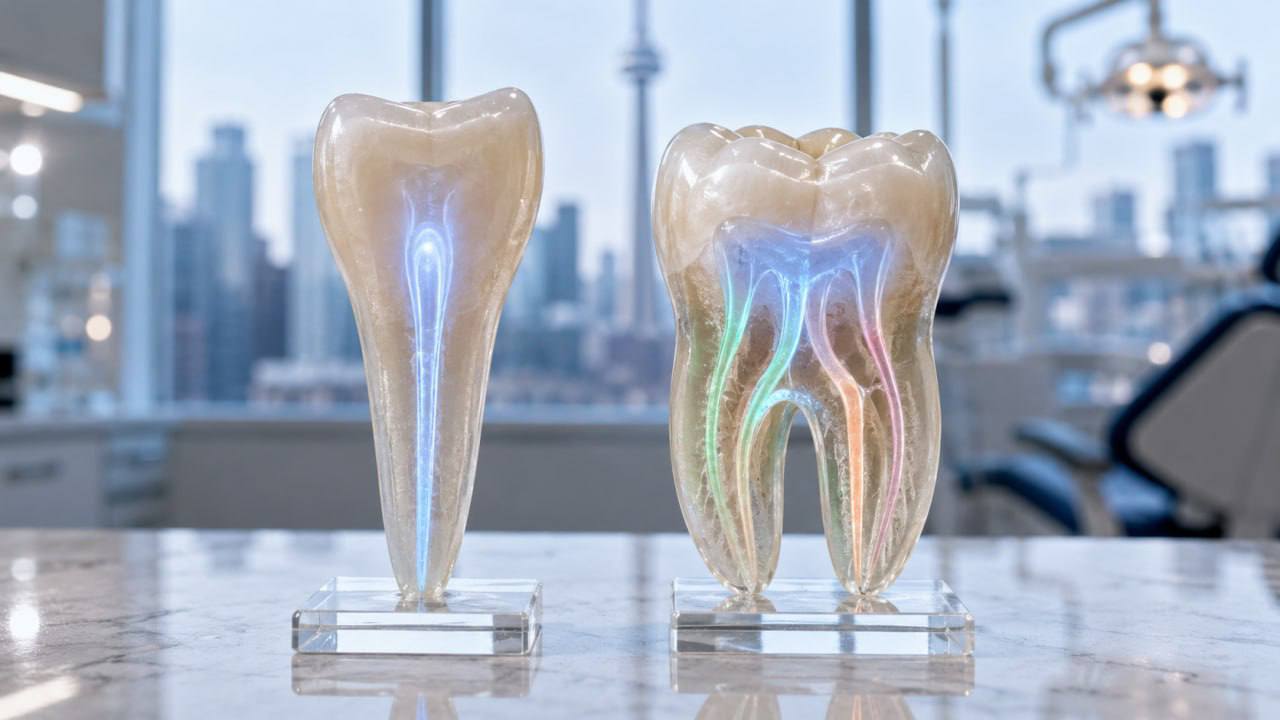
In general, root canal cost depends on three things: which tooth is involved, how complicated the infection is, and whether you need a crown afterward. Front teeth with a single, straightforward canal sit at the lower end of the pricing spectrum. Molars, with their multiple curved canals and harder-to-reach roots, sit considerably higher.
Most dentists in Ontario reference the Ontario Dental Association's suggested fee guide as a starting point, though every clinic sets its own pricing based on overhead, technology, and the dentist's experience level. That's why two clinics ten minutes apart can quote noticeably different numbers for what sounds like the same procedure.
A few realistic patterns worth knowing:
- A root canal on an anterior (front) tooth is typically the least expensive type, since these teeth usually have one canal.
- A root canal on a premolar costs more, given the slightly more complex root structure.
- A root canal on a molar is the most expensive category, often involving three or four canals.
- Retreatment of a previously failed root canal almost always costs more than a first-time procedure.
There's no fixed, universal price tag here, and that's not a sales tactic, it's just dental reality. The only way to get an exact figure is a clinical exam and an X-ray, which is why we always recommend a proper consultation before assuming the worst about your budget.
Root Canal Cost in Downtown Toronto vs Old Town Clinics

Location plays a quieter role in pricing than most people expect, but it's real. Clinics in downtown Toronto often carry higher overhead, commercial rent, staffing costs, equipment leases, and that gets reflected somewhere in the fee structure. Clinics in neighbourhoods like Old Town may offer more competitive pricing while still maintaining the same clinical standards, simply because the operating costs differ.
That said, price isn't the only variable worth weighing. A few things shift the equation:
- Technology access – Clinics with in-house digital imaging and rotary endodontic equipment can sometimes complete treatment more efficiently, which affects both comfort and cost.
- Specialist availability – Some downtown practices have closer working relationships with endodontists for complex cases, which matters if your infection is advanced.
- Patient demand – High-traffic downtown clinics may have longer wait times for non-emergency appointments, while smaller neighbourhood practices, including ones in the St. Lawrence area, often offer more flexible scheduling.
If you're comparing quotes between a downtown practice and one in Old Town Toronto, ask what's included in the price, not just what the number is. A lower quote that excludes the crown isn't actually a lower quote.
How Much Will a Root Canal Cost in Ontario and Canada?
Zooming out a bit: pricing in Toronto generally tracks with broader Ontario and Canadian benchmarks, with some regional variation. Provinces set their own suggested fee guides, and Ontario's tends to run on the higher side compared to some other provinces, largely due to cost of living and clinical overhead in major urban centres.
A rough way to think about it:
This table is meant as a general orientation, not a quote. Fee guides are suggested guidelines, not mandatory pricing, so individual clinics still set their own rates within reason. If you're relocating to Toronto from elsewhere in Canada and comparing your old dentist's pricing to a new one, expect some adjustment, but not a dramatic shock.
What Affects Root Canal Procedure Cost in Toronto?
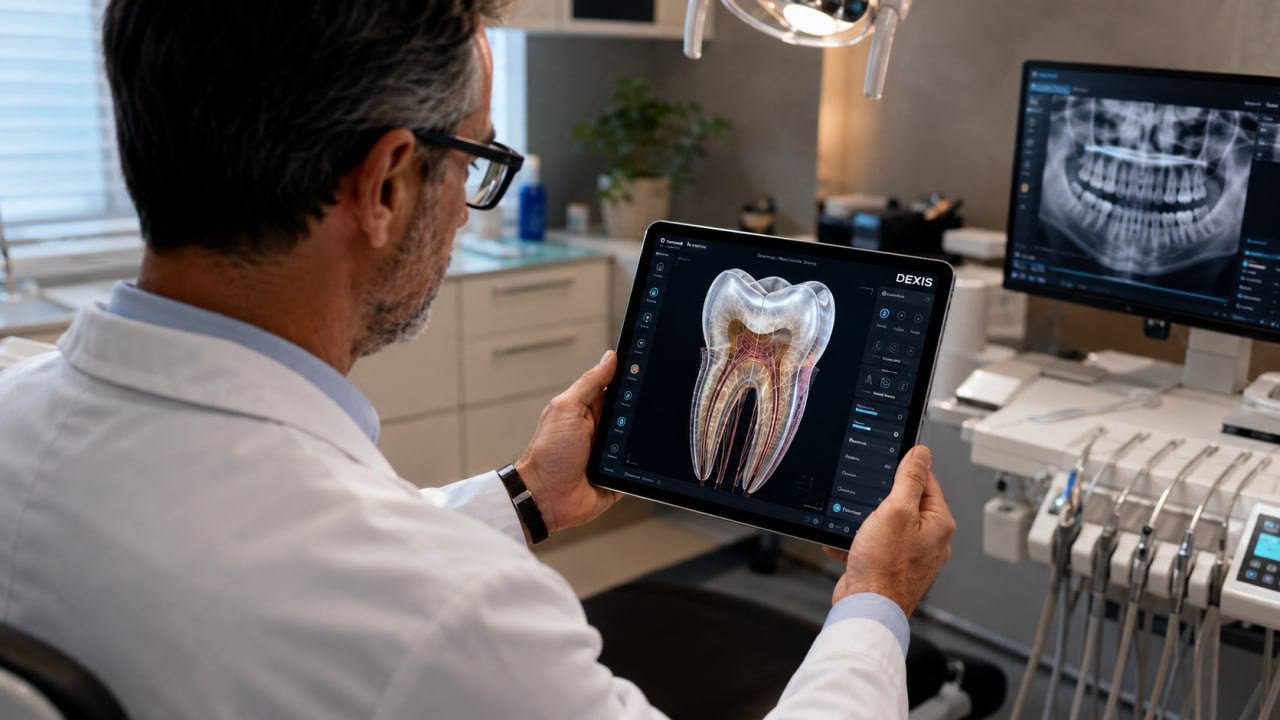
This is really the heart of the matter. Five factors do most of the work in determining your final bill.
Tooth Type (Front Tooth vs Molar)
We touched on this above, but it bears repeating because it's the single biggest pricing driver. A front tooth has one root canal to clean and seal. A molar can have three, sometimes four. More canals mean more time in the chair, more material, and more clinical skill required, which is reflected in the fee.
Infection Severity and Damage Level
A tooth caught early, before the infection has spread into surrounding bone, is generally more straightforward to treat. A tooth with significant decay, an abscess, or bone involvement requires more careful management, sometimes additional imaging, and occasionally a longer treatment timeline split across two appointments. Severity adds cost not because anyone's padding the bill, but because the clinical complexity genuinely increases.
Number of Root Canals Involved
Sometimes a patient needs more than one tooth treated, either because multiple teeth were affected by the same underlying issue or because a previous filling masked decay that spread. Each additional canal procedure is priced individually, so the total adds up accordingly.
Need for Crown After Treatment
This one catches people off guard. A root canal itself only removes infected tissue and seals the canal, it doesn't restore the structural strength of the tooth. Most back teeth need a crown afterward to prevent fracture under normal chewing pressure. We'll go deeper on this below, but it's worth flagging here: the root canal cost and the crown cost are usually two separate line items.
Endodontist vs General Dentist Pricing
General dentists handle the majority of root canals, especially on front and premolar teeth. More complicated cases, curved canals, calcified roots, retreatments, are often referred to an endodontist, a specialist focused exclusively on this type of procedure. Endodontist fees tend to run higher, partly due to specialized training and partly due to the advanced equipment used for difficult anatomy Restorative Dentistry
Root Filling Cost and Additional Treatment Expenses
Root filling cost refers to the material used to seal the canal once it's cleaned, typically a biocompatible substance called gutta-percha. This is usually included within the overall root canal fee rather than billed separately, but it's worth confirming with your clinic so there are no surprises.
Beyond the filling itself, a few additional expenses commonly show up:
- Core build-up – a foundational filling placed before a crown if significant tooth structure is missing
- Crown placement – often the largest additional cost after the root canal procedure
- Retreatment – if a previous root canal fails or reinfects, addressing it costs more than the original procedure
- Emergency add-ons – same-day pain management, additional X-rays, or after-hours fees in urgent situations
A practical example: a patient with a cracked molar might need the root canal itself, a core build-up, and a crown. Treated as separate phases, the combined total looks larger than a single "root canal cost" headline figure, which is part of why online searches for pricing can feel misleading. The procedure itself is one piece of a slightly bigger restoration plan.
Is Root Canal Covered by Insurance in Toronto?
For most patients with dental coverage, yes, at least partially. Here's how it typically breaks down.
Basic vs Major Dental Coverage
Insurance plans generally split procedures into categories. Root canals usually fall under basic or sometimes major restorative coverage, depending on the insurer. This classification affects what percentage gets reimbursed.
Percentage Coverage (50–80%)
Most plans reimburse somewhere in the 50% to 80% range for endodontic treatment, though this varies significantly by provider and plan tier. Employer group plans tend to be more generous than individual policies purchased privately.
Annual Maximum Limits
Almost every plan has an annual cap, sometimes $1,000, sometimes $2,500 or more. If you've already used part of your coverage on cleanings, fillings, or other treatment earlier in the year, less may remain for the root canal and any follow-up crown.
Pre-Authorization Process
For anything beyond a routine procedure, clinics often submit a pre-authorization request to your insurer before treatment begins. This gives you a written estimate of what's covered, so you're not guessing after the fact. It's a step worth insisting on, even when a tooth is painful and you want treatment immediately.
Out-of-Pocket Scenarios
Patients without coverage, or those who've hit their annual maximum, pay the full fee directly. Many Toronto clinics offer payment plans or financing options for these situations, which is worth asking about upfront rather than after the invoice arrives.
A quick disclaimer worth stating plainly: insurance coverage details vary by provider, employer plan, and individual policy. Nothing here should be treated as a guarantee of what your specific plan covers, always confirm directly with your insurer or ask the clinic to submit a pre-authorization.
Root Canal vs Tooth Extraction Cost in Toronto
This is where the math gets genuinely interesting, and where short-term thinking can cost people money down the line.
On paper, extraction often looks cheaper than a root canal in the moment. Pulling a tooth is a relatively quick procedure with a lower upfront fee. But that comparison only holds if you stop the math there, and most people don't actually want a gap where a tooth used to be.
Here's the fuller picture:
Once you factor in replacement options, implants, bridges, or partial dentures, extraction frequently ends up costing more over time than simply treating and saving the original tooth. There's also the matter of bone preservation: a missing tooth root means the jawbone in that area gradually loses density, which can complicate future implant placement.
None of this means extraction is always the wrong call. Severely fractured teeth, advanced bone loss, or certain medical situations sometimes make extraction the more sensible path. But for a tooth that can realistically be saved, root canal treatment tends to be the financially and functionally smarter choice over a ten-year horizon, not just the cheaper one today. Dental Implants & Oral Surgery
Do You Always Need a Crown After Root Canal?
Not always, but more often than people expect.
Front teeth, which carry less biting force, sometimes only need a standard filling after the root canal is complete. Molars and premolars, which absorb significant pressure during chewing, almost always need a crown. Without one, a treated tooth is structurally weaker and at real risk of cracking under normal use, sometimes catastrophically, which can mean losing the tooth anyway after all that treatment.
Quick breakdown:
- Front teeth: crown sometimes optional, depending on remaining tooth structure
- Premolars: crown often recommended
- Molars: crown strongly recommended in nearly all cases
The cost implication is straightforward: budgeting for a root canal without budgeting for a probable crown on a back tooth is planning for half the picture.
Root Canal Cost in St. Lawrence Neighbourhood Toronto
Patients in the St. Lawrence neighbourhood searching for root canal treatment are typically looking for accessible, established dental care without trekking across the city. Local clinics in this area generally offer pricing comparable to broader downtown rates, with the added convenience of shorter travel times and, often, more personal continuity of care, the kind where the same dentist sees you for both your regular cleanings and your emergency visits.
Accessibility matters more than people realize when a tooth infection flares up unexpectedly. Knowing there's a clinic nearby that can fit you in quickly, rather than booking three weeks out, often outweighs a marginal pricing difference between neighbourhoods.
Emergency Root Canal Cost in Toronto
Severe tooth pain rarely waits for a convenient Tuesday afternoon. When infection flares suddenly, swelling, throbbing pain, sensitivity to temperature, emergency root canal treatment becomes necessary, often same-day.
A few realities about emergency pricing:
- Same-day or urgent appointments sometimes carry a modest premium over scheduled treatment
- Severe infections may require additional imaging or medication before the canal procedure itself
- After-hours or weekend emergency visits typically cost more than standard business-hour appointments
- Walk-in emergency dental care prioritizes stabilizing the infection first, with full treatment sometimes phased
If you're in pain right now, don't let cost uncertainty delay a call. Most clinics, including ours, will discuss pricing transparently before any irreversible step, and getting the infection assessed early is almost always cheaper than waiting until it worsens Dental Emergency
Why Treating a Root Canal Early Saves Money Long-Term
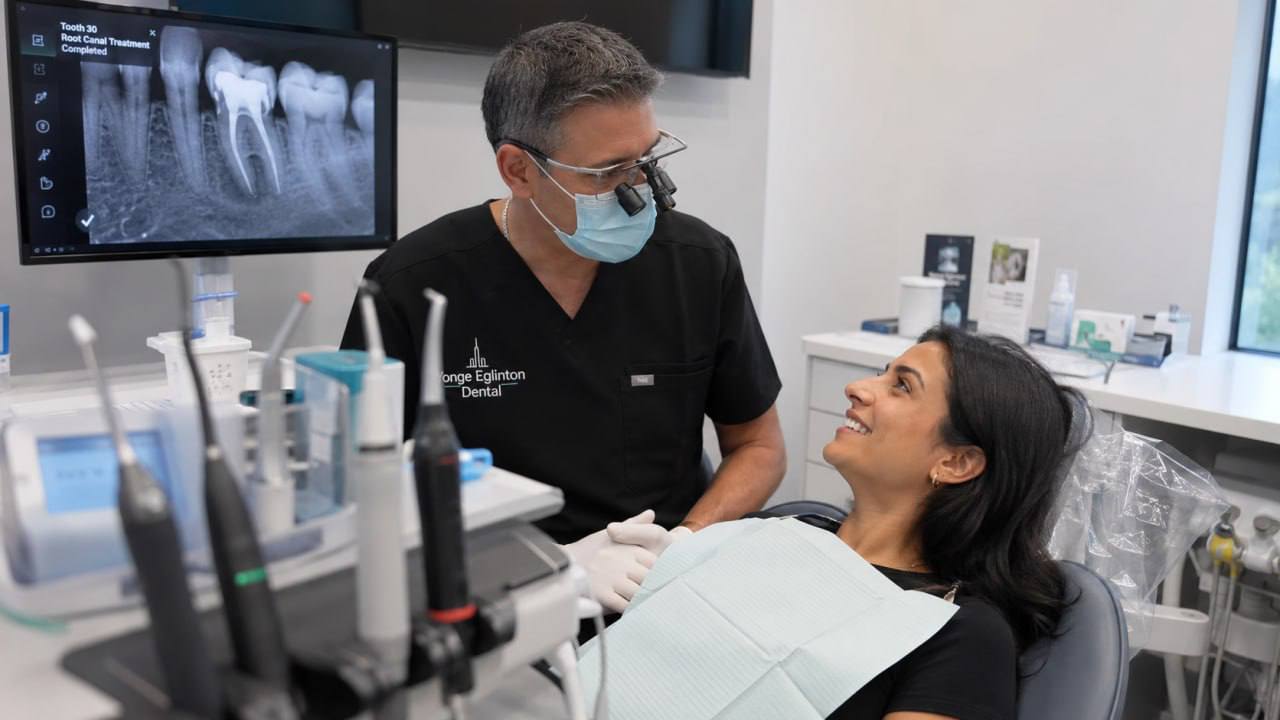
This is the section worth reading twice if you're on the fence about booking.
Delaying treatment on an infected tooth rarely makes the problem smaller. It tends to do the opposite:
- Infection spreads beyond the tooth into surrounding bone and tissue, sometimes requiring more extensive treatment than a straightforward root canal would have.
- The tooth weakens further, increasing the odds that extraction becomes the only remaining option.
- Extraction triggers replacement costs, an implant, bridge, or denture, all of which cost considerably more than the root canal that could have saved the original tooth.
- Adjacent teeth get affected, as bite alignment shifts and neighbouring teeth compensate for the gap or the pain-avoidance chewing pattern.
Treating a root canal early, while the infection is still localized, is consistently the less expensive path when you look at the full timeline rather than just the invoice on day one. It's a bit like fixing a small leak versus replacing a flooded floor, the early intervention is rarely the expensive option in hindsight.
Root canal services near you in Downtown Toronto, Old Town Toronto and St. Lawrence Market Area
Don’t wait until tooth pain or infection becomes a bigger problem.
Book your root canal consultation today and Get a clear, personalized root canal assessment and treatment cost estimate in Toronto
Visit us and take the first step toward a healthier smile
The clinic provides detailed root canal assessments, X-rays, treatment planning, and transparent cost breakdowns based on individual dental needs.
📍 149 Lower Jarvis St, Toronto, ON
Serving: Downtown Toronto, Old Town Toronto, St. Lawrence Market Area
For directions and location details:
Get directions to Market Dental Centre
Final Thoughts
If there's one takeaway worth carrying away from all this, it's that the root canal cost in Toronto isn't a mystery so much as it's a moving target shaped by your specific tooth, your specific infection, and your specific insurance plan. No article, including this one, can hand you an exact dollar figure without first looking inside your mouth.
What we can tell you with confidence: insurance typically softens the financial impact significantly, early treatment is almost always cheaper than delayed treatment, and saving a natural tooth tends to outperform extraction-and-replace options over the long run, both financially and functionally.
If you're in Toronto, downtown Toronto, Old Town, or the St. Lawrence neighbourhood and dealing with tooth pain right now, the most useful next step isn't more searching, it's a proper diagnostic consultation. Market Dental Centre offers full assessments to give you an accurate, personalized estimate and a clear treatment plan, so you're making decisions based on your actual situation, not a generic price range from the internet.
Book a consultation with Market Dental Centre today to get a clear, honest picture of your treatment options and costs.
FAQ
How much does a root canal cost in Toronto?
Pricing varies based on tooth type, infection severity, and whether a crown is needed afterward. Front teeth generally cost less than molars. An exact quote requires a clinical exam.
How much will a root canal cost in Canada?
Costs vary by province, with Ontario generally tracking at the higher end of the national range due to urban overhead and demand.
Is root canal covered by insurance?
Most dental plans cover a portion, often in the 50% to 80% range, subject to your annual maximum and plan specifics. Pre-authorization confirms exact coverage before treatment.
Does a root canal include a crown?
Not automatically. The root canal addresses the infection inside the tooth; a crown, usually billed separately, protects and restores the tooth's structural strength, especially for molars.
Is a root canal painful?
Modern root canal treatment, performed under local anesthesia, is generally no more uncomfortable than getting a standard filling. The pain people associate with root canals usually comes from the infection itself, not the treatment.
How long does a root canal last?
With a properly fitted crown and good oral hygiene, a treated tooth can last decades, in many cases, a lifetime.
What is root filling cost?
This refers to the material used to seal the canal after cleaning, typically included within the overall root canal fee rather than charged as a separate line item.
What happens if I delay a root canal?
Delaying treatment allows infection to spread, increases the risk of needing extraction, and often leads to higher overall costs down the line.
Is extraction cheaper than root canal?
Upfront, sometimes. Over the long term, once replacement options like implants or bridges are factored in, root canal treatment is frequently the more cost-effective choice.
Can I get an emergency root canal in Toronto?
Yes. Many clinics, including Market Dental Centre, offer same-day emergency assessments for severe tooth pain or infection.
.webp)


