



Invisalign and Clear Aligners in Toronto
Thinking about straighter teeth but prefer a more discreet alternative to traditional metal braces? Invisalign and other clear aligner systems use a planned series of custom-made, removable trays to guide your teeth gradually toward new positions. Depending on your individual needs, they may be considered for crooked teeth, crowding, spacing, or certain orthodontic concerns. At Market Dental Centre in Downtown Toronto, a consultation can help determine whether clear aligners may be appropriate for your teeth, bite, oral health, and treatment goals. These systems can support appearance-related goals as well as certain orthodontic needs, but they are not suitable for every type of tooth movement or bite concern. An individual dental assessment is the first step in understanding your options.

What Are Invisalign and Clear Aligners?
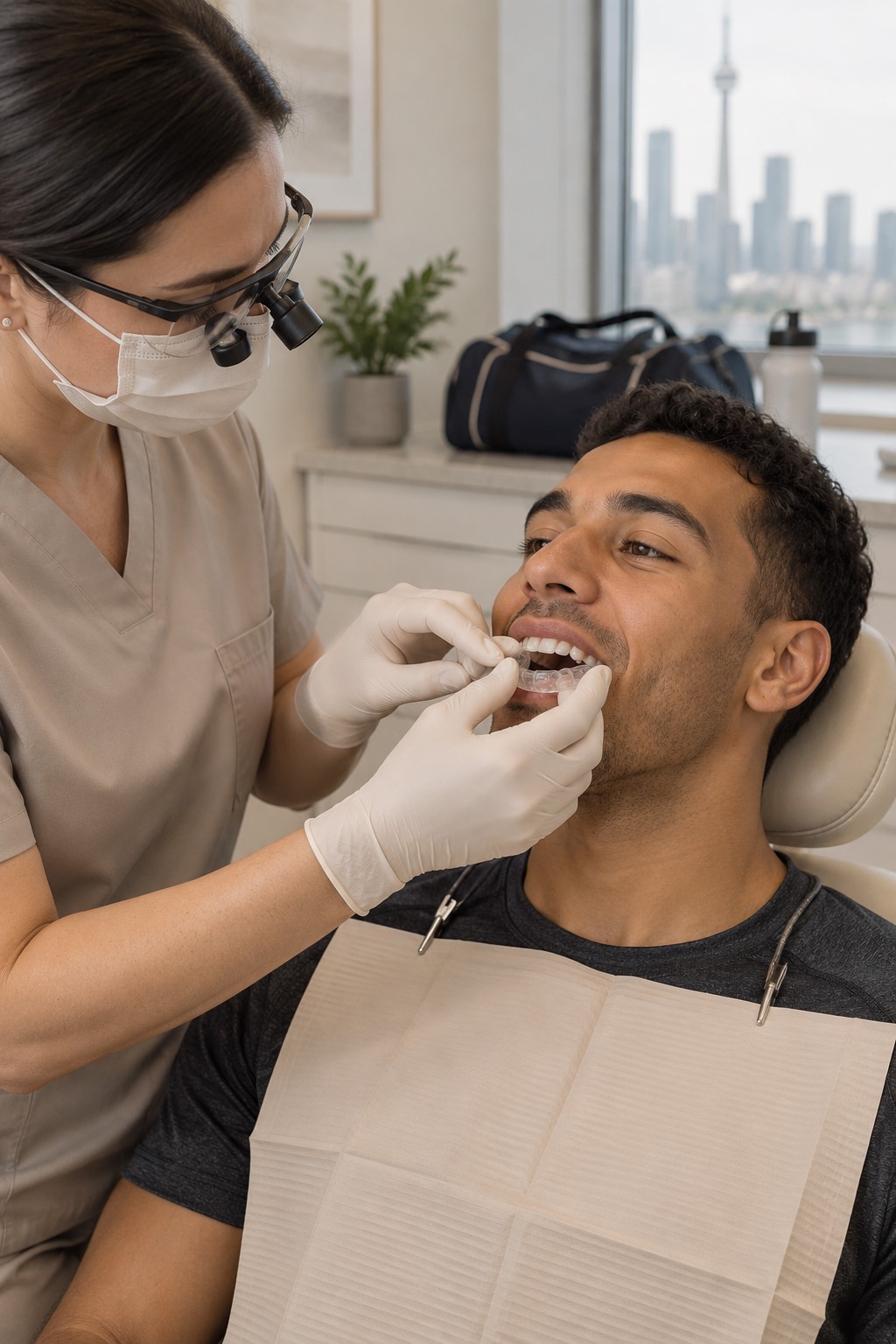
Clear aligners are transparent, removable orthodontic trays designed to fit over your teeth.
Treatment typically uses a planned sequence of trays rather than one aligner worn from start to finish. Each aligner is custom-made for a particular stage of treatment and applies controlled pressure to selected teeth, helping guide them gradually toward the positions outlined in your treatment plan. You move through the series in the order and schedule recommended by your dentist.
Invisalign is one specific brand of clear aligner treatment, while “clear aligners” refers to the broader treatment category. Not every clear aligner system is Invisalign. The most appropriate system and treatment approach depend on the tooth movements required, your bite, your oral health, and the findings of an individual dental assessment.
How Does Invisalign Treatment Work?
Clear aligner treatment uses a planned sequence of small, controlled tooth movements. Each tray is designed for a particular stage of the plan, applying pressure to selected teeth to help guide them toward their intended positions. The process generally works as follows:
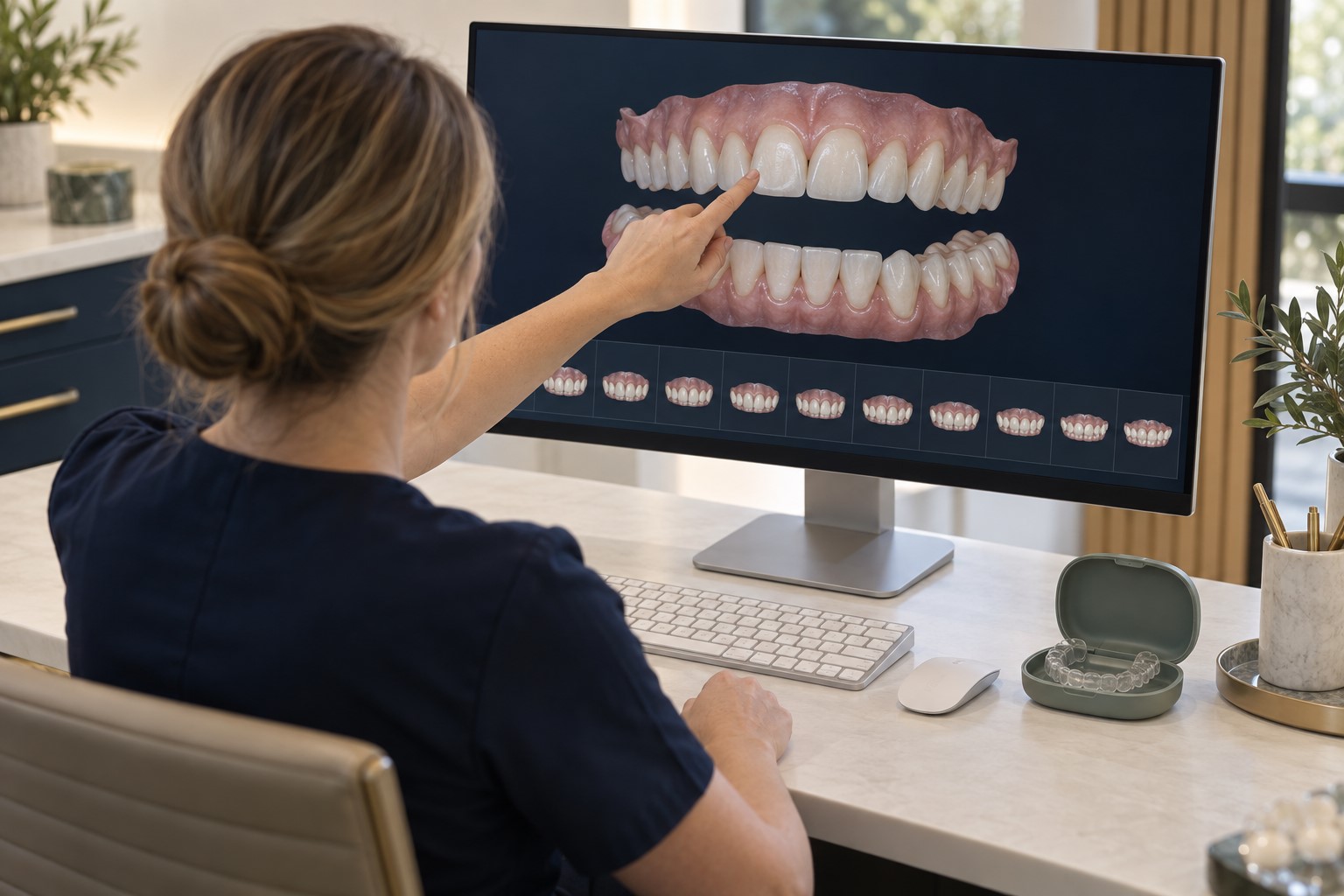
Planning the Tooth Movements
Your treatment plan outlines which teeth need to move, the direction of those movements, and the order in which they are expected to occur. Each aligner corresponds to a specific stage in that sequence.
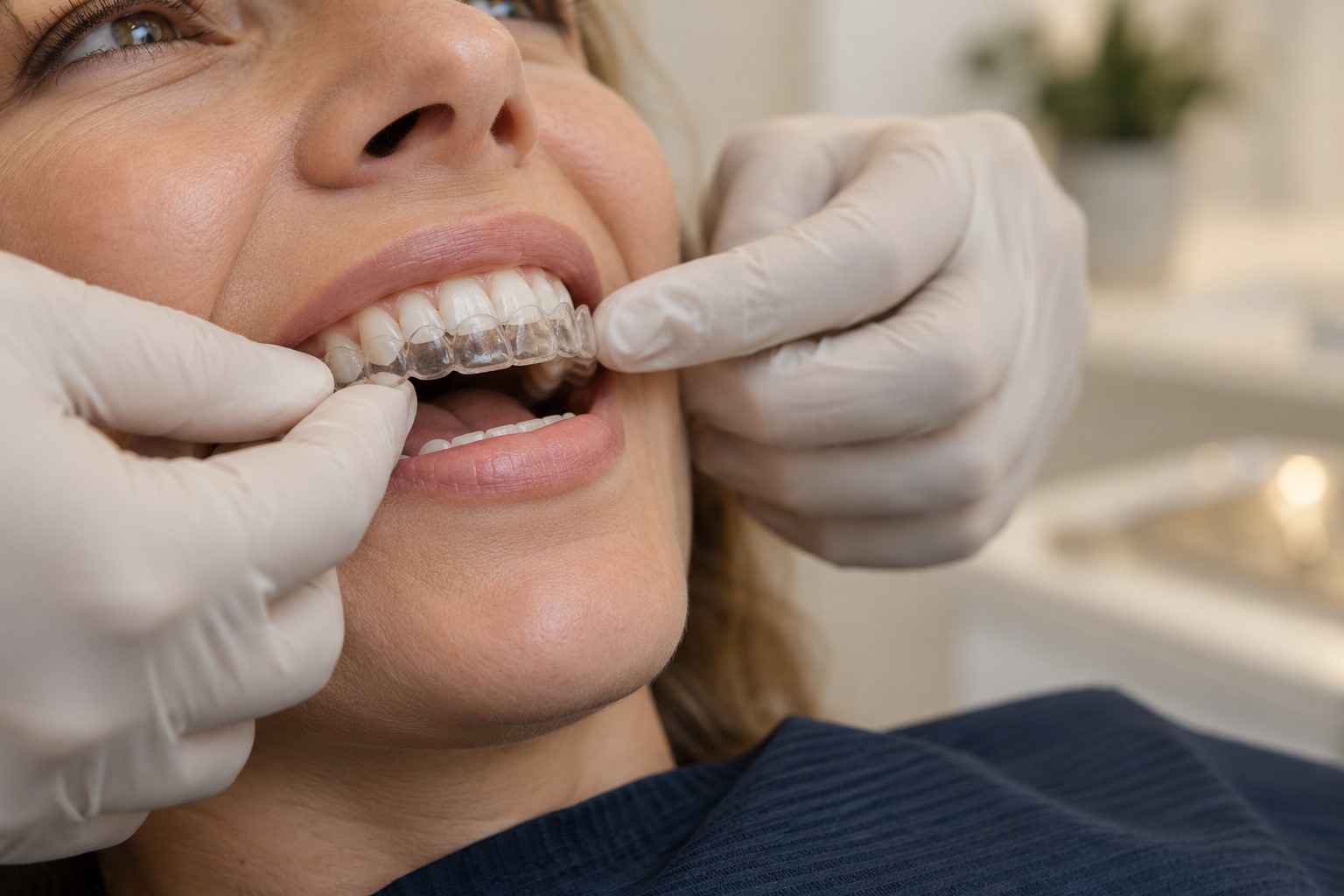
Applying Controlled Pressure
An aligner applies targeted pressure to particular teeth. Different trays may focus on different movements, so not every tooth is necessarily moved at every stage.

Progressing Through the Aligner Series and Monitoring Your Progress
You move from one aligner to the next according to your dentist’s instructions. Consistent wear is important because each tray prepares your teeth for the following stage of treatment.
Follow-up appointments allow your dentist to assess how your teeth are responding and determine whether any changes to the treatment plan are appropriate.
Individual responses can vary. Regular monitoring helps keep treatment aligned with your clinical needs and planned goals.
Invisalign vs. Traditional Braces
Neither clear aligners nor traditional braces are automatically the better choice. The appropriate option depends on the type and complexity of tooth movement required, along with your bite, oral health, daily routine, and ability to follow treatment instructions. Each approach has practical differences that are worth considering.

How Much Does Invisalign Cost in Toronto?
It is reasonable to want a clearer understanding of the financial commitment before considering clear aligner treatment. There is no single Invisalign fee that applies to every patient because the total cost reflects the treatment required.
Factors that may affect cost include:
- The type and complexity of the tooth movements
- The amount of crowding, spacing, or bite correction involved
- The expected treatment length and number of aligners required
- Any additional dental care that may be clinically appropriate
- Your individual treatment plan
After assessing your teeth, bite, oral health, and treatment needs, your dentist can discuss a personalized estimate. This provides more relevant information than a broad online price that may not reflect your situation.
How to Care for Your Clear Aligners
Caring for both your teeth and aligners is an important part of clear aligner treatment. Your dentist will provide instructions based on your treatment plan and the aligner system being used.
- Clean the aligners according to the professional instructions you receive
- Continue regular brushing and flossing throughout treatment
- Store the trays safely whenever they are not being worn
- Handle each aligner carefully to reduce the risk of damage or loss
- Contact the dental office if a tray is lost, damaged, or no longer fits as expected
Care recommendations can vary between aligner systems. Follow the instructions from your dental team rather than relying on general online advice or an unverified cleaning method.
Can You Eat and Drink While Wearing Clear Aligners?
Clear aligners are commonly removed for meals. Guidance about drinking while wearing them can vary between aligner systems, so follow the instructions provided for your treatment plan rather than assuming the same rules apply to every tray.
After eating or drinking, follow your dental team’s directions for cleaning your teeth and aligners before placing the trays back over your teeth. Aligners should also be replaced promptly enough to maintain the prescribed wear schedule.
What Is the Invisalign Treatment Process Like?
Clear aligner treatment generally follows a planned sequence, although the details vary with each patient’s oral health, orthodontic needs, and treatment plan.
1. Consultation and Dental Assessment
The process begins with a discussion about your concerns and treatment goals. Your dentist assesses your teeth, bite, gums, and overall oral health to determine whether clear aligners may be appropriate.
2. Planning Your Aligner Treatment
If aligner treatment is recommended, a personalized plan is developed around the tooth movements required. A planned series of custom aligners may then be prepared for the different stages of treatment.
3. Wearing Your Aligners and Monitoring Progress
You wear and change the aligners according to the instructions provided for your plan. Follow-up appointments allow your dentist to monitor how your teeth are responding and decide whether the plan needs to be reviewed.
4. Retention After Active Treatment
After active treatment, a retainer may be recommended to help maintain the positions of your teeth. The type of retainer and recommended schedule vary by patient.
The exact sequence, timing, and details depend on your clinical needs and the clear aligner system being used.
What Happens During an Invisalign Consultation?
Discuss Your Concerns and Goals
You can explain what you have noticed about your tooth alignment, appearance, bite, or changes following previous orthodontic treatment.
It is also an opportunity to ask questions about clear aligners.
Evaluate Your Teeth and Bite
Your dentist assesses tooth position, crowding or spacing, your bite, and the condition of your teeth and gums.
These findings are considered together, since the health of the teeth and supporting tissues can influence which options are appropriate to discuss.
Discuss Suitable Treatment Options
The findings help determine whether clear aligners may be appropriate.
Traditional braces or another approach may be discussed when different movement or control is required.
Review the Proposed Next Steps
If aligner treatment appears suitable, your dentist can discuss further planning, treatment responsibilities, follow-up needs, and individualized estimates for timing and cost.
A consultation does not automatically lead to Invisalign treatment. Its purpose is to help you understand which options may be clinically appropriate.
What Dental Concerns Can Clear Aligners Address?
Clear aligners may be considered for a range of tooth-alignment and spacing concerns, as well as selected bite issues. Having one of the concerns below does not automatically mean that aligner treatment is right for you. Suitability depends on the movements required, the complexity of the case, your bite, and your overall oral health.
An individual dental assessment is needed to determine which concerns are present and whether clear aligners can support your treatment goals.

Why Choose Market Dental Centre for Clear Aligner Treatment?

Patients considering clear aligners may value a local assessment that looks beyond appearance alone. Market Dental Centre offers Invisalign and clear aligner treatment within a general dental practice in Downtown Toronto.
A Downtown Toronto Location
Market Dental Centre is located at 149 Lower Jarvis Street, near St. Lawrence Market.
Care That Considers Your Overall Oral Health
A general dentist assesses your tooth position, bite, gums, and overall oral health before discussing whether clear aligners may be appropriate.
Dental Services in One Practice
The clinic offers a range of dental services in one practice. This may be useful when other oral health needs must be considered alongside your alignment goals.
A consultation can help clarify whether clear aligners are clinically appropriate and what next steps may be considered.
Frequently Asked Questions About Invisalign and Clear Aligners
What Is Invisalign?
Are Invisalign and Clear Aligners the Same Thing?
Can I Eat While Wearing Invisalign?
How Long Does Invisalign Treatment Take?
Can Invisalign Fix Crooked Teeth?
Can Clear Aligners Fix Gaps?
Are Clear Aligners Better Than Braces?
Book Your Clear Aligner Consultation in Toronto
If you are unsure whether clear aligners may be appropriate for you, a consultation at Market Dental Centre in Downtown Toronto can provide guidance based on your dental needs. Your dentist can assess your teeth, bite, and oral health, discuss treatment options, and explain the next steps that may be considered.
Book an Invisalign Consultation
We’ll follow up to confirm a time and answer your questions.
Please do not include sensitive medical information. This form is for appointment requests only.
